Friday, July 15, 2011

Getting Gold For Releasing Your Load


A lot of people are pretty passionate about so-called 'social games' on computers and smartphones currently. Okay, passionate is not the right word. ADDICTED is probably the right word. Like there’s a thin membrane laced with crack cocaine right under the touch screens and its been seeping into their skins. None of that namby-pamby baking, shopping, or tending for me though.

My crack-game of late has been Akai Katana Shin on the Xbox 360. I’ve spent more recent hours on Mortal Kombat attempting to get a last few achievements, in what should’ve been an afterthought, but turned out to be way too much work. Freeing myself from that bloodbath, I’ve been playing Cave’s latest shooter in earnest now, and I find it really hard to put down.

I enjoy Cave shooting games in general, but this title has even more of ‘the one more try’ factor than the rest of their catalog. The disc has three versions of Akai Katana on it, Shin, Arcade, and Zetsu. I’ve been playing Shin mode predominantly, and it has weapons and scoring so awesome and cathartic that replaying the early stages on restart hasn’t gotten the least bit tiresome to me. This post is going to deal mostly with Shin mode, then. The disc is region-locked to Japan. If you don't have a JPN console you can't play this, though I'd dare to say this game would be a big incentive to get one.

Like any Cave shooter, you can either play ‘for survival’ or ‘for score’… these terms used by gamers as nutshell phrases trying to encompass the balance between risk and reward. If you want to generate more or bigger scoring items you are going to have to put your ship (or avatar) at risk by getting closer to enemies before you shoot them, letting the screen fill with extra bullets, or milk boss characters for extended lengths of time… some version of ‘extra jeopardy’ rather than simply trying to kill every enemy as fast as possible to increase each ship’s survival time by minimising enemy fire. It is these sorts of risk/reward mechanics that make shooters compelling, and it’s where Cave’s particular style of STG excels. Also in Akai Katana Shin, as in most Cave games, learning to play well for score eventually ends up benefiting your survival as the extends come sooner or more frequently, and the timing and strategy you needed to get that score translate into survival skills. Once a player learns the ins and outs of a Cave game, playing for score IS playing for survival.

The thing about Akai Katana Shin for me is that the visual and audio depiction of the scoring system is so frickin’ cool… it just has ‘something’. But the risk, most of the time, is not nearly as brutal as other Cave games. And it is recoverable. If you fail to take advantage of a high scoring section, it won’t take long for you to reach another opportunity. It doesn’t feel (though I could be wrong) that getting the highest scores is nearly as ‘scripted’ as it is in say Ketsui or Dodonpachi Daioujou.

I also found that the blending of score and survival play styles came MUCH sooner. I love Ketsui, and I’ve dumped a lot of hours into it, but I’m still playing the entire second half of that game in pure survival mode. With Akai Katana Shin, I’m deliberately risking ruining great runs to the end by trying to keep huge chains alive and lining up as many bullets as possible in the sights of my super-weapon… and loving every minute of it. Yeah, yeah, I still curse when I die, but I think Cave hit on the perfect combination for me. In an earlier post about Bangai-O HD, I remarked on the cathartic thrill of that game’s over-the-top screen-filling uber-weapon. Akai Katana Shin pushes the same buttons with its ‘Ninja mode’ katana blitz.

For those who can’t be bothered with trying to dig up the info online: In Akai Katana Shin you pick one of three pilots/planes. Each corresponds to the typical Cave rules; one with narrow, straight but strong shots. One with a fair amount of spread to the pattern, but a little weaker. One with wide, fanned out shots that catch most of the screen but are quite weak and will not make short work of many of the enemies. Each pilot also has a ‘Ninja’ companion, who normally exists as a sort of ‘option’ orbiting the player’s plane. After building meter, you push a button and your plane switches out for a large, flying human (and no option), who has enhanced abilites and is the secret to triggering the aforementioned uber-weapon awesomeness. Again typical of Cave (and danmaku in general) if you hold down the fire button in any mode it focuses your shots at the expense of speed. The bombs in Akai Katana do clear enemy bullets as well as destroying the enemy themselves. A form of auto-bomb is the default. If you get hit by an enemy, while on your last life, the game will trigger your entire remaining bomb stock to keep you alive.

--If you use normal shot (rhythmic tapping), dead or injured enemies release light blue orbs (magatama actually, the comma-shape that figures heavily in Japanese history and myth) that power a couple of your Ninja abilities and keep a chain counter going.
--If you use focused shot (button held) the enemies release green energy orbs that increase the amount of time you can spend in Ninja mode.

When you are all ready to go, switching to Ninja form gives you two options;

--A defensive ‘blue Ninja’ (rhythmic tapping) who slows incoming bullets down and can continue to collect blue orbs.
--Or the offensive ‘red Ninja’ whose fire collects ‘katana’ swords from dead enemies. .

So basically, you fly through the stages, mostly using regular shot to collect blue orbs, with the occasional dip into focused shot to get some green E’s, it doesn’t take a lot of energy to fill up and sporadic use of focused shot won’t break your hit chain.

Progress collecting is indicated by a glowing ring of characters around your ship and a green bar at the top of the screen. At any time you can switch to Ninja mode and it will consume whatever you have in green bar. The blue orbs you collected will be reflected in the number of magatama surrounding your ninja. You can stay ‘defensive’and treat the Ninja like your regular old ship albeit he/she can slow down incoming fire somewhat, but there’s a time limit based on how much green you had in the meter before you changed. Or you can go ‘offensive’, by holding down the fire button, switching to red. This shoots out the circle of magatama and they cause damage to enemies and cancel bullets. As they do this, they fling katana back to your ninja. So really, the more blue orbs you collect before you switch, the more magatama, and katana, you will have to work with. If you hold fire down as the red Ninja portions of your fire output will gather additional katana from dead enemy, but your green bar timer is still counting down, so it’s better to collect what you can before triggering Ninja mode.

With a cloud of katana surrounding you, here’s the REALLY fun bit. Apart from the blue orbs and green E items, there are gold scoring items marked with a red G. You get these in various sizes when you kill enemies in different ways in Ninja mode. As I said earlier, when you switch BACK to ship mode, any katana hovering around your ninja will shoot forward (or wherever you aimed them). Anything they strike, will be destroyed and emit clouds of the biggest form of gold item. They blossom all over the screen and then get immediately sucked into your ship. Opportunities to do this come frequently in the game. And if you amass enough swords before unloading, any enemy apart from end bosses will go down with one glorious, slowdown-inducing barrage.

If I had any criticism about the game itself, it would be that all this orb-gathering and gold-fountaining frequently obscures the awesome artwork on display in the game’s graphics. Akai Katana’s art style is reminiscent of the stodgy ironworks machines found in titles like Metal Slug or In The Hunt. But you’d have to play through seriously reducing your scoring attempts in order to see a lot of it! The way it all works is so awesome however, that the complaint is kind of pathetic and hollow really.

The above explanation does not encompass many of the subtleties in the game and its scoring but it gives the gist. Essentially what you have here is a game with such cool and layered weaponry, that the time-honored, screen-clearing bomb is almost unnecessary. Through some strategic timing, you almost always have overwhelming force on tap. It is seriously boner-inducing when you get a full complement of swords lined up on a huge midboss, let some popcorn enemies gather around him, and then wait for scads of enemy fire to blanket the screen and almost reach you… then trigger twelve katana right into the heart of the shitstorm, flying your plane behind that steel wall of consuming death so that you can vacuum up all the gold that much quicker.

Practically a video game orgasm. Ooh! That’s what the appeal actually is! Cave has distilled human sexual response into a shooting game! YES!

Seriously, I could go on and on about the other things the game does so right. I think Cave soundtracks are generally ‘okay’. Usually I think they are appropriate for whatever game and usually there’s one or two standout tunes (ie, the TLB theme from Ketsui), but not the sort of thing I’d spend a ton of time listening to on my iPod. The music from Akai Katana Shin isn’t going to make my favorites list, but it is a damn sight better and more memorable than most of their previous music. I’ve already mentioned the visuals, but additionally, this is the first Cave game in a while where ‘lolis’ in some form were NOT front and center. Instead the game has a sort of old-fashioned industrial feel with clunky little tanks and turrets, and prop planes. All the player characters, teen girls included, are dressed in a military manner, and pretty lacking in fan service opportunities. That isn’t to say the character art is particularly manly. It is still pretty swishy, as seems to be the style these days. But the armies and weapons are glorious. Rendered in HD-friendly resolution, and with plenty of screen adjustment options. Also, it’s horizontally-oriented, so no tate required.

I don’t think this game will necessarily make a gamer a fan of the bullet hell style. And it may actually vary from the Cave formula, with its multiple uber-weapon system, too much for a lot of Cave diehards. Also, since it’s a hori like Progear and Deathsmiles. So vert-only players might shun this too. But to me this game just does everything so right. It is absolutely spectacular, and brings enough new things to the table that it doesn’t play like any other Cave game… or any other shooter that I can think of.

There was one massive oversight, though, and I’m kind of baffled that Cave, at the time of this writing, has not issued a patch to fix: you cannot enter your initials on the high score tables. If you post your score to an Xbox Live leaderboard it DOES use your gamertag, so proper credit is attributed. But in ‘local’ terms you can’t ID the scores played on YOUR console. Pretty glaring considering high score tables, and their three initial entries, are pretty much rock-standard in shooters since Space Invaders.

That error aside, I can’t recommend Akai Katana Shin highly enough. I haven’t even really scratched the surface on Arcade and Zetsu modes. Arcade is essentially a recreation of the original game, complete with the faults that got it kind of a lukewarm reception in Japanese arcades. But it is the mode that allows two players at once. Zetsu is a sort of ‘fixed’ version of Arcade and would be the de facto standard now for basic Akai Katana (without the Shin part of the title). Unless some super surprise entry blindsides me between now and Christmas, Akai Katana Shin will probably end of Game Of The Year for me in 2011.
(screenshot ripped from Andriasang)

Wednesday, July 13, 2011

My Absolute Favorite...


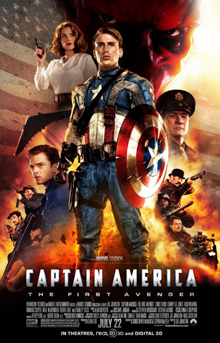
File:Captain America The First Avenger poster.jpg

...superhero of all time.

I collected every comic I could and watched reruns of the old black and white serial shows. I've stomached more recent, but terrible color TV movies, and his criminal underuse in the otherwise excellent new Avengers cartoon show on the Disney channel. I threw up my hands in despair at his apparent assassination after Marvel's Civil War (which I enjoyed on its own).

But this could make up for the misfires and mistakes. I may just crap myself waiting for July 22nd.

Mexican Boy Done Good


I’m really digging the film work of Guillermo Del Toro lately. He works in the dark fantasy and horror sort of area, doing Spanish-language films and then bouncing over to English films for Hollywood. Even in low(er) budget films he manages to provide intricate, believable visuals and work his settings and situations into incredibly atmospheric and forbidding viewing.


Most people in this country are probably most familiar with the two Hellboy films, which were so much better than 90% of movies based on comic book properties. But NetFlix has some of the other stuff; the early Cronos, and his two period dark fantasies set in Franco’s Spain, The Devil’s Backbone and Pan’s Labyrinth. Del Toro has described himself as fascinated by clockwork and insects. You can see this fascination all through his films, where even a creature as innocuous as a faun becomes horribly fascinating and frightening. Even though he's from Mexico, I get more of an Old World vibe from his stuff. Peeling paintings and corroded brass more than adobe and red brick, if that makes sense.

I’m still working away at catching everything he’s done. There’s a new film in the near future, Don’t Be Afraid Of The Dark. The previews make it look like every other haunted house movie with a child as the central victim/avatar. But it ALSO looks like it could mine the same veins as Pan’s Labyrinth or The Orphanage, and that would cut the film well above the typical bullshit.

Del Toro was going to be the director on the two Hobbit films, but that fell through. Nothing against Peter Jackson, but holy hell! I would’ve loved to see an earlier Middle Earth through Del Toro’s eyes.

In other Spanish-language news I’ve also been catching up on the much more limited back catalog of Pedro Almodovar, but I’m not sure I can even comment on that weirdness.

Tuesday, July 12, 2011

Times of Excess

Video game players who've been around a long time, like old-timers in any culture, frequently pine for the good old days... frequently its those never-to-be-equaled times when 2D was the order of the day and your-choice-of-dead-system ruled the kingdom.

But honestly we've never had it so good. I've done my share of cranky old bitching with the rest of 'em, but we are living in a golden age game-wise. When I was a kid, I'd have let a pack of grimy gnomes pull half of my teeth out if I could've had access to all the amazing shit players have today. There are times like, uh NOW, when I think gamers, journalists and players both, are almost assholes for complaining.

Some things were the same then as they are now. There are still cheesy or cheating players. The companies ARE out to make a buck and sometimes they do things or make decisions that suck. Some design choices could've been implemented a lot better. Games with frustrating difficulty.

But we are such absolute spoiled little shits. I mean I look around at what I have... what my kids have. Maybe not everyone has the gaming setup my family does... some have more, some have less obviously. Currently I have a large plasma screen with multiple consoles hooked up (through nothing less sharp than s-video) to two switch boxes, including a Neo Geo AES which was an untouchably expensive system when it came out. My kids each have an LED flatscreen in their rooms with my daughter having a Wii attached to hers, and my son having an Xbox 360 and PS2 on his. Both of them also have DSi handhelds, and a box with most generations of Nintendo portables ready to hand. Currently they are enamored with iOS games because they've each gotten an iTouch this summer. All the games... and these number in the hundreds by now... are all readily available, neatly arranged on shelves organised by system and whether it has been 'beaten' or not. Compared to most 'civilian' households this is a bit deranged, but compared to many homes where video games are a big part of the landscape this is nothing. We don't even have any video game merch apart from some Sonic shirts my son owns.

But what the fuck, yeah? I mean 'the good old days'? What is that really supposed to mean? If there's some old system you want, you just go buy it on ebay or emulate it on your laptop or play downloaded versions of that system's games on a newer console. Lamenting the passing of good old 2D gaming? Through these means you can relive all the old shit OR just take a look at the dowload or portable spaces and see where 2D platforming and fighting and shooting lives again.

It's endless. I can't even keep up with it anymore. If you want to talk about games, gamers, or gaming, communities small and large are never futher away than your mouse opening up a browser. I can have an online conversation with a buddy in Australia and then go see what he's playing on his Xbox 360 right then, live. My son frequently puts on his headset to chat with one friend who's playing Fallout, while he himself is fighting seven other guys in a Halo retread!

Recently my kids have taken to the so-called social gaming scene. These are retardedly casual games that require little more than patience and the ability to resist spending real money on virtual objects. Tap Zoo, Bakery Story, etc etc ad nauseum. It looks like most of the 'fun' is in making friends and looking in on what other people are doing with their versions of the game. Not my cup of tea. But the point is that it is a whole new form and venue that doesn't even have an analog in the 'old days' of video games.

Child of Eden is the first game I've seen that makes me think about buying a Kinect. Standing in your room and moving your body about to play a game is something out of Tron, kids. We could only imagine it. You can join a MMORPG and thousands of fellow adventurers are pushing around in the same sandbox as you are... at the same time. The closest thing to that in the really old days were MUD dungeons. Those almost aren't even recognisable as games by today's standards.

There ARE things that have gone away, and not for the better. Shit that I miss. As connected as we all are, none of it replaces the thrill and immediacy of arcade gaming. All the lights and sounds (particularly in GOOD arcades). The competition, particularly in fighting games. Even in shooting or platforming, getting your initials up on the high score screen, knowing the next person to come along might knock you off, that was something. Civilians frequently picture gamers as solitary loners, sweatily pawing their keyboards to slog through onscreen dungeons between visits to porn sites, but video gaming has always had hugely social aspects to it. The whole world is the arcade now, but fighting teabaglulz99 from Novia Scotia doesn't have quite the thrill, to me, of sending little Billy packing after he's beaten four previous players spamming Genan's spin move in Samurai Shodown.

A lot of the creativity SEEMS to have left. Favorite franchises get mired down in their same old mechanics. But then the fans shit noisy geese if the devs try to change anything. These are more contentious times. Everyone thinks they should have a say. Access to other gamers is so easy, the noise can be overwhelming. Print isn't really dead, but in terms of game magazines, the information mainstay of the old days, it might as well be. Getting all your gaming news, reviews, and opinions from the internet seems so very soulless. And how much work is it to separate out all the fucksticks at Kotaku, Destructoid or wherever, from worthy information. Developers often seem to operate like movie studios and their summer blockbusters. Big budget titles pandering to the lowest common denominator. Committees deciding what gamers want, and the creator/auteur aspect squeezed completely out of the equation.

Games these days are too easy. Or too hard. Or too short. Too long. Too expensive. Really?

I'm dabbling with Mushimesama Bug Panic on my kids iTouch. It is five 'worlds' long, with each world having five stages and a boss stage. It has hidden items and areas if you wish to look for them, and rewards you with pieces to a jigsaw puzzle mini game for each item you find. Each stage probably takes about five to ten minutes if you try to search out all the hidden items and manage not to die. Bosses take only a few minutes but you are not likely to get them on the first go. I'm currently stuck myself on one of the stages in the middle of the last world. So adding togther thirty stages at say ten minutes apiece, you could say you get three hours of game assuming you play perfectly AND don't replay anything for a better score or fiddle with the jigsaw puzzle bonus game. On an iTouch, it is a pretty small screen, but the graphics are colorful sprite-based objects typical of Cave. And of course loads of bullets on screen and a bazillion point items all being vacuumed up by your avatar, Reco. This would probably be the cat's ass on an iPad.

I paid five bucks for it. That's only one dollar an hour assuming I get ONLY five hours total out of it. Here's a game that answers all the complaints. It isn't too short, it is a few hours for a five dollar game. There's more with the replay value. It isn't too long, it is perfect pick up and play gaming, you can leave off wherever and get right back to it whenever. It isn't difficult to get pretty far in the game, but it isn't so easy that there's no challenge. As I said, I'm currently rather stuck near the end. Just as it should be.

Also? Five bucks. My biggest complaint is the controls, but I'm a big fat baby when it comes to touchscreens so my complaint about that should be taken with a grain.

In a world where video games are so common and available there IS a fuck-ton of dreck out there, no doubt. But a little looking around and a willingness to read up on shit and mess around with demo versions will do wonders. My kids will download and play with any piece of crap on their iTouches, but that's part of the fun too.

I guess this rant is a bit of a call for perspective. There are reasons to bitch. It's fun to bitch and vent. But to go back to the good old days? Time and memory paint those days rather rosy. It WAS more exciting to get a new game back in the Genesis days. Games weren't just falling around us like they are now. Every purchase or gift was an event. But the actual PLAYING... there's so much more to it now. AND you can have the games from the old days if you want to. I can jump and dash Sonic through his contest with Metal Sonic just as I did then. But I can also play a game where a single controller handles dodging, flying, slashing, and pointing into the screen to shoot (like a lightgun game) ALL AT THE SAME TIME. See Sin & Punishment: Star Successor for the Wii.

I'm grateful my kids get something good out of video games just like I did (and still do). They also have an appreciation for the older stuff, as I've gone on about before in this blog. I've been around, and playing, from the early early days of video gaming, and I need to appreciate the NOW. Games are still really fun. a player just might have more sifting to do now then I did back then. That seems like a small price to pay for all the choices.

Thursday, June 23, 2011

Composed In The Baroque Mode


I’ve been sinking quite a few hours into Sting’s role-playing game, Baroque for the Nintendo Wii. One variant of the several, historically mutable, definitions of the word ‘baroque’ is: ‘adorned or decorated so heavily the original intent is unclear’.


That would definitely fit this video game and the choice for that title has to be intentional despite Japanese developers penchant for devising titles in English that are nonsensical or ill fitting. Baroque’s mechanics are so convoluted (though the controls are simple) and its narrative so obscure that, personally, I’m incredulous that somehow this thing actually got made at all, let alone was successful enough to warrant conversions to multiple platforms.

In the heyday of the Sega Saturn, the lion’s share of my purchases were Japanese import titles. Baroque first released in 1998 looked really interesting from the screenshots and descriptions. Very murky and mysterious and cool. But the Japanese-only language issue was a problem. I’d just gone through Samurai Spirits Bushidoretsuden, the Samurai Shodown RPG, with the help of a guide and that was pretty damn labor-intensive. Good game and fun, but a lot of work. I also had the Saturn’s Japanese-language Grandia in my to-play stack. I really didn’t want yet another guide-aided slog. So I didn’t buy it.

Flash forward nearly ten years, and I see copies of a game called Baroque at my local GameStop in both the PS2 and Wii sections. WTF? Cover art and screenshots looked sort of like the game I thought of as Baroque, but not as dark and evil. Yep, plot description seems to jibe with my memory. I looked up online to be sure. Sure enough Atlus USA published remakes of the RPG Baroque in the United States. Not only was the game now totally accessible to my English-speaking self, but a lot of additional information was also in the form of an online mini-community. And while trying to avoid outright spoilers, I was reading that Baroque’s graphics were brightened up, the mechanics for controlling and fighting modernized, but that it was still considered a grueling hardcore dungeon crawl (original Wizardry came to my mind reading that stuff).

I’m already on the fence about RPGs as it is. Given that I used to play pen & paper role-playing games, and used to work for Games Workshop (not an RPG company, but fantasy toy soldiers and a lot of its customers and staff are also role-players), you’d think the genre would form a regular part of my balanced breakfast, but not so.

My indulgence in RPGs has never been more than occasional. I’ve racked up far more minutes in action games with RPG elements; basic item management and leveling up as games such as Odin Sphere or Castlevania: Symphony of the Night. But actual role-playing games I have played I can probably count without having to include my toes or other appendages. Two real reasons: one, I’m impatient with the learning curve and strategy aspects. While I like ‘exploring’ well-conceived game worlds, I want to just get to it. And I am (or believe I am) suck-ass at the more think-y aspects of many games including puzzles and tactics. Two, RPGs typically require A LOT of time put in. I play a lot of video games for a working parent, but sometimes it can be sporadic. I mostly go for short-burst pick up and play games that suit my lifestyle. So that’s why my ‘currently playing’ list is so dominated by arcade games like fighters and shooters. When I do have some kind of long-play title I’m working on, it’ll be an ‘action-RPG’ (SOTN mentioned above), or some first or third-person shooter, games that are not nearly as intricate and attention-demanding as RPGs are. I’m also pretty easily immersed. I don’t require dense, novel-trilogy levels of detail. I grew up as an arcade gamer and so it isn’t so easy for me to find the patience for games that really drag out at all, let alone to the levels many RPGs pad themselves out for maximum perceived value.

So weirdly, I am in some aesthetic ways someone who should like RPGs, but based on practical concerns I tend to shun them. Every now and then I'll get enough of a hankering. Most recently I played through Skies of Arcadia on the Dreamcast. I also bought the Virtual Console version of Chrono Trigger, like two weeks ago, but my kids have beaten me to that one for now. Baroque’s bizarre science and religion mash up story… revealed as your character continually cycles through death and rebirth…looked pretty intriguing. That the play style involved some ‘roguelike’ features; randomized dungeons, complete reset of characteristics and items upon death, just made it appealing to the so-called hardcore (okay, masochistic) side of my gamer self.

In any case, I chose to go with the Wii version. And the wiimote/nunchuk combination works fine with the game. The combat in Baroque is rather action game-y and the part of the game that resembles ‘standard RPG’ mechanics the least. You have to actually run around and fight in real-time. You can avoid enemies or circle around them to strike when they are vulnerable. My understanding is that this was tricky in the Saturn original. The dark graphics and the limitations of a first-person view made fighting difficult. Switching to third-person and clearing away the murk makes Wii Baroque much less frustrating, although it is still tough until you learn what you are doing. These fixes came at the expense of much of the game’s evil atmosphere. It may have made things difficult, but Saturn Baroque had a grim, grimy ambience that is lost to a shinier (but still fairly plain) new version. The soundtrack has been re-done too. The new one is fine to me, and quite fitting for the game, but players of the original frequently say it isn’t a patch on the Saturn’s moody industrial tunes. The story itself is largely unchanged.

Now having spent a considerable time with the game, I do find even the new version to be problematic. Most players used to other games would probably find the combat inflexible, the dungeons repetitive, and the dying/resetting aspect quite off-putting. None of that bothered me. The graphics, sound, music, and controls; none of these are cutting-edge, but they all came together for me personally.

Nope, my difficulty comes from the very heart of the game designers’ philosophy, and one of the things that made me want the game a decade ago. The way the mysterious plot and the in-game objectives are doled out.

As I said in the beginning, Baroque hides the particulars of its narrative points under layers and details. At first, you play and are trying to just figure out how to survive. Then you are trying to figure out how the items work or interact with each other. Then you are trying to figure out how to find or keep the best items. THEN you want to figure out what to do next. Apart from just going through the dungeons—what is the point? Well, NONE of this stuff is spelled out for the player. The manual has a lot of words in it but doesn’t really put the system together. The manner in which items are used for various effects (there’s no magic system) is discovered through trial, error, and numerous deaths. The non-player character dialogues are cryptic in the extreme, but critical to the game. All of this reflects the Japanese original quite accurately and effectively simulates your avatar who, in the story, has no memory and no idea what to do. Story and objectives are progressed by hearing dialogues, but it can frequently take many conversations with multiple characters just to dial in a single goal. And the whole time you are running around trying to find these conversations, you are highly vulnerable and still trying to work out other basic aspects of the game, like trying live long enough and not just die and repeat the upper few levels of the dungeon…again.

Most dialogues are triggered by items given to the speaker. There are hundreds of items in the game, with the player having a limited inventory. So again, a lot of running around and experimenting. This may be the first collect-a-thon type of game where collecting every goshdamn thing is integral to the story and not just a bonus for completists. You can complete a Mario game without finding all the stars, but in Baroque, you really have to pay attention to what you’ve acquired so you know what moves the game itself along. Add to THAT enemies and objects that can take your shit away from you… and yeah, a TON of work. And you MUST die multiple times. On paper that seems like a cool, hardcore concept, but in practice it isn’t so simple when the game severely limits what you will be able to keep with you the next time you resurrect. There IS a system for moving items around or hanging on them for your next incarnation, but the way its done is all part of the game’s strategic underpinnings… and while I wouldn’t say it is tedious exactly… it is a lot of work.

The game lets you save after each completed dungeon level. So I kind of found myself keeping a couple of save points running at all times, so that I could revert to a previous happier moment if something untoward happened, frequently the loss of a needed item rather than a death. I generally didn’t allow myself to ‘die’, as it were, until I’d gotten to the end of each dungeon run, where you have to either die or be absorbed by the game’s deity. Which usually furthers the narrative.

At this point, near the completion of the game, I’ve had numerous restarts from save points but my character himself is on his eleventh incarnation. From my understanding this is pretty fuckin’ speedy. A lot of players have logged many many more hours than I have. Here’s the thing, though. This is a game for completionists. For players who like to winkle out every detail and every nuance. It is for gamers who don’t mind plugging through the same hallways and rooms, because there’ll be some other weird item to find or slice of dialogue to hear. The game has extensive screens for tracking everything you find. I get the appeal of this, and I even find it compelling myself to a certain point… but it isn’t for me. I made time for an RPG, but I didn’t make time for the most demanding collect-a-thon I’ve ever heard of. So I did something I’m not proud of:

I used a guide.

Not just for one hint. Not just to find some devilishly well-hidden item. I mean I used it EXTENSIVELY.

It happens every now and then that I’ll hit up an online guide or walkthrough when I’ve reached my limit on trying to figure out an objective. That’s probably my most common reason. I can’t get my head around the various clues given in the game, if in fact there are any clues—some games as we know, don’t always work logically—so I hit up some online help to connect me to the next step. Less frequently I might look up tips or strategies to beating a troublesome level or boss. But in the main, I consider it pretty easy to get too much help and spoil the experience. So I try to be judicious. This is really the way most mature gamers use helps or walkthroughs, but it has been a bitch to explain to my son, who doesn’t understand how figuring shit out is ‘more fun’ than having your hand held through the whole thing. I’ve resorted to hazing and sarcasm to keep him away from guides.

If I’m going to use help in any significant way, I’ll buy the actual printed official book and use it AFTER I’ve completed whatever basic story mode or campaign is the backbone of the game. As I said, I’m not a collector-maniac in video games, but sometimes it is cool to continue to poke around for stuff. So for some games like Bayonetta, Vanquish, or Brutal Legend, I liked the game worlds so much that it was fun to buy a guide, and explore to get to previously unseen areas or find items or learn to play the game better or in unconventional ways. I don’t think looking under every rock and tree is loads of fun, but having the guides gives me a bit more incentive to spend some extra time in a game world without the tedium of endless clueless searching. I also frequently buy guides for fighting games. For some reason I just prefer my move lists in front of me in print, rather than pausing the game to look it up onscreen.

I avoided buying Saturn Baroque because I didn’t want to eke through it inch by inch using a guide to get around the Japanese…but that feels like what I did with the English version anyway! As I was playing, early on it became apparent I would not have the patience to work the details of this game out on my own. So I went to a walkthrough intending to just learn how the items, item combination, and inventory system worked.

But as I played and discovered that every single tidbit of information (necessary and otherwise) was going to be delivered in the same obtuse, miserly manner, I caved and started fishing out what my actual goals and objectives were. Who to talk to, where they were located, and what item to give them. I managed to avoid actual plot spoilers, so the central desire to find out what ‘the story’ was about remained for me, but that was about the only discovery aspect I got to experience. As much as I hate using a guide it is hard for me to say this actually ruined the game for me. I would like to stumble upon meaningful events on my own, but the amount of play time required for this was just more than I could possibly afford. So I sort of reduced the actual play mechanics to the same level of directness that almost every other RPG employs. ‘Take this magic book to the wizard who lives in the tower’ might be something an NPC would say to you in your traditional role-playing game, so I kinda forced that onto my game of Baroque. I’m not thrilled to admit it, but as compelling as the story is, I would NOT have stuck with the game if left entirely to my own devices. Life’s too fucking short.

In hindsight, I can now see a sort of ‘play formula’ that I could’ve used to get through the game without a guide to the objectives. It’d still require that the player know more about the basic mechanics than the manual or the game really tells you, but I could write up a breakdown that would leave all the surprises and discovery intact while giving the player a better shove out the gate. And in fact, some people have done this; they just aren’t quite ‘explanatory’ enough, I don’t think. Maybe I should start up a page on this blog for this purpose. ‘KOG’s Truly Useful Guide To Baroque’.

Here’s an odd final note: Like some RPGs (and a few other types of games), Baroque has a post-campaign scenario, an endgame. If a player completes these epilogues it’ll usually net you the complete, true, or additional ending. Chrono Trigger is pretty well known for this, allowing you to take your fabulously leveled-up protagonist back through the story, now able to take on the final boss at his earlier appearances in the game and so get a different ending, depending on where in the chronology you destroy him.

After Baroques’ credits roll, you strangely find yourself resurrected yet again. Ostensibly, this would help the collecto-freaks this game caters to continue to work at filling in all the item slots in the database, but supposedly if you accomplish such-and-such-and-such (yes, I used the guide to see if there were, in fact, any goals in this endgame) you actually bring some dead NPCs back to life and redirect the course of events again. The such-and-such-and such are actually pretty complicated, involving hunting down dozens of items and bringing them out of the dungeon over the course of multiple runs. So I figured that was pretty much all she wrote for my continued involvement. As I said, this game makes fanatic collecting a literal part of the game, and there’s this huge stretch ahead that I didn’t really want to indulge. But on a whim, I thought I’d just check out the dungeon one last time, seeing what was different now that I’d ‘saved the world’.

Not much was. BUT. At the bottom of the dungeon, I got the dialogue saying I’d triggered the final set of events. I didn’t DO the such-and-such-and-such that the guide says you need to do. I just played as well as I could and then went back in one more time for old times’ sake. So just to test if I really was in the final stretch, I entered the dungeon and headed right for the floor the guide indicated would house the first set of ‘final’ enemies. And there they were. I was loaded up on invincibility items (just in case) and it wound up that I needed them. Then I actually killed the creatures. So now I find myself somewhat jazzed at the idea of actually completing the full story arc, which seemed like a lark only a day ago. I don’t know how it happened, but I am only three or four dungeon runs from finishing the narrative aspects of the game. One run for each set of the final enemies. It seemed like I was going to have to resort to reading the dialogue online or watching Youtube clips of the final section, but I’m glad I held off on doing that.

In a day or two, the game should be done, and I’ll feel really fortunate that somehow, using a guide, I manage to play this intriguing, difficult game while divesting myself of all the bullshit in it that would’ve made me throw in the towel ages ago. Despite my guide-guilt I feel like it’s a really good game, but there’s so much about it that makes it difficult to just outright recommend.

(image kyped from Daily Record UK)

Tuesday, June 14, 2011

Musical Roundup


Bought a bunch of music over the last month, and I probably ought to at least say a few words about it, particularly since I don't keep a 'what I'm listening to' box in my sidebar. My 'current' music choices just change too rapidly. These'll just be quick, though some might merit a bit more detail in a later posting. Not all of these are NEW new. They are just new for me, but I've gone through a pretty serious drought in music buying for like a year now:

November's Doom- Into Night's Requiem Infernal. Doom/death metal. Circles around the same musical camp as Opeth, but less progressive and fewer clean vocals. They actually picked up the pace on more songs with Novella Reservoir and everything after and this is along the same lines. Just about any metal fan would like this musically, and the lyrics are more personal (typical of Doom Metal like My Dying Bride), but if you can't get around death vocals steer clear.

Children of Bodom- Relentless, Reckless Forever. Symphonic power thrash. A stunning return to form for Children of Bodom, who've played with simpler, more accessible songs over the previous two (non-cover) albums. But if you'd missed the old symphonically-inspired CoB, here's your tonic. I'd never have said Laiho and band had descended to Nu-Metal or anything, but some fans were just that put off. I was just kinda bored. I mean I own the last two, but I hardly ever listen to them. This one goes into rotation with Hatebreeder and Follow The Reaper! Fucking-A.

Evergrey- Glorious Collision. Progressive Metal. I love Evergrey. Especially Tom Englund's vocals. The guy has a somewhat smoky voice like Bob Seger or Joe Cocker but far more musical and soulful. Hell, when I met Tom, the conversation I had led me to start buying New Rock Boots! But. Evergrey is one of those bands whose style is so distinct and unvarying that they start to sound same-y. Which is weird to say about a so-called progressive band since the hallmark of the genre is variety. A lot of people dissed past a album Monday Morning Apocalypse because it had more power chord melodies and less Evergrey-style staccato galloping, but I found it really refreshing. Then when they followed that up with Torn, it was back to the rut. They're like Katatonia, whom I wrote about in a previous entry. I love 'em but I can't listen to a lot of the material in one stretch because it is just so similar. Thankfully Glorious Collision mixes in some shit similar to MMApocalypse with the typical Evergrey to vary things. The album isn't disjointed either. Whew. Thanks Tom.

Eisbrecher- Eiszeit. Industrial metal (or the German-identified genre, Dance metal). This is a weird one. Eisbrecher is firmly in the same genre as Rammstein. So much so that they are frequently called a clone of the more famous band. In this record, they branch out and have a lot of tracks that don't sound much like Rammstein... or at least 'typical' Rammstein since those guys can go pretty left field too. But Eisbrecher's choices are pretty odd. It makes for interesting listening, but it'd be really difficult for me to say I like it all. Might be a grower. I'm not going to bitch about it because trying to move out from under Rammstein's shadow is commendable. Maybe different choices are needed.

Rotersand- 10 23. Industrial/EBM. Rotersand may be my new favorite amongst the EBM and Futurepop style of outfits. More varied and unpredictable than The Covenant or VNV Nation. Heavily influenced by Pink Floyd if you can believe it. That makes it sound like they wouldn't work up any dance floor music, but Rotersand is incredibly good for that, though they have some slower stuff... and almost always open with a track that sounds literally like Floyd. I can't really say this album is 'more this' or 'more that' than any other because they are all over the tempo and mood maps on each record... except perhaps Truth Is Fanatic, an early album that is probably more 'typical EBM' than anything since. Highly recommended if you like Industrial club music but don't need to stay in that mode the whole listen.

Funker Vogt-Blutzoll. Industrial/EBM. If you've heard Funker Vogt you know what to expect. The album is typical of the group. It has a decent variety and is high quality but nothing grabs me by the boo-boo like the track Paralyzed from Aviator.

The Devin Townshend Project- Addicted. Heavy Metal. That tag doesn't really describe Devin's work all that well, but I'm loathe to try to circulate a new genre term that attempts to describe his wall-of-sound style. Devin, the mad scientist of metal, is currently working on a four-album series of which this is the second. I skipped the first, Ki, because I was a bit put off by it. Each of the four albums is to have a signature theme-style and I didn't dig what I sampled from Ki. Now I think I have to go back and get it. Addicted is amazing. This would be more like what I'd call typical of Devin's 'other' projects... the ones that aren't Strapping Young Lad. So if you like Ocean Machine or Synchestra, here you go. In addition, he drafted Anneke von Giersbergen (formerly of The Gathering) and she sounds fucking awesome. Her own current work is in a pop band, but she has not lost any of her ability to power right the hell over big instrumental sounds. Like organised crime families, once you're in metal I guess you can never really get out. Devin himself is no slouch. Capable of very melodic soft singing, reaching pretty high notes, or screaming fit to make your spine curl up into a coil. Everyone should want to have Devin's baby.


Okay. That's all for now.

The Dynamite Is Kind Of A Dud

Okay, I'm firmly in the half of Napoleon Dynamite's audience that thinks 'WTF?'.

On paper, I should like this movie, or at least see the merit in it. It is unconventional and weird. It has an outsider/marginalised hero. The humor is, um, unusual. Its chock-full of quotables and lexicon nominees.

But I feel like a total mainstream lamer fuck. I just don't get it. I mean I feel all the things that fans of the film feel apparently... but only for about ten minutes. After that, it just doesn't keep up even a minimum effort to entertain. Its almost bad-documentary dry (or as boosters like to say 'subtle'). After those ten minutes you've met almost all the characters. Seen them be incredibly awkward (frequently making you the viewer uncomfortable), and then you (at least I) am expecting these characters to be put through some ordeal, be it fish-out-of-water scenario or rise-past-limitations/expectations story. But that never happens. The whole film is just a slice of life for weird Idaho-ans. I guess the arrival of Uncle Rico is supposed to be the world-shift challenge that Napolean and company meet, but everything comes off like they'd just find something else to behave exactly the same way about whether Rico was there or not.

I thought the funniest character (in the conventional sense) in almost every way was Rex, the martial arts instructor, who coincidentally is played by the only veteran comic actor in the film, Diedrich Bader, the mulleted neighbor in Office Space. He isn't the ONLY funny thing about the movie, but he really had me fooled at the beginning that this film was going to be entertaining. That was a bad assumption on my part. Rex is NOT the only funny thing but the real laughs are so few and far between. The payoff in Napolean's dance scene is pretty awesome, but really doesn't make up for all the tedium in getting to it.

The film made the interesting and effective choice of looking like it is firmly set in the 70s, yet with the 80s cassette audio tapes and VHS video tapes being the common media in use... and that set alongside the concept of the internet and chat rooms. So if nothing else the look of the film is as odd as the characters. And I'll say this; wow, what a transformation for Napolean, Kip, and Deb. Holy shit, they look almost nothing like their real selves. Jon Heder (Napolean) in particular, just dis-afucking-pears.

Anyway. I feel so totally un-hip, but I just can't bring myself to like it. I still can't really figure out why it was made... what the point of it is. Maybe it's some delayed action thingie that'll strike me when I'm out riding a bike or taking a shower. You'd think with all the shirts, quotes, and paraphernalia that have been swirling about since its release, that even a dense old shit like myself would be in on the joke.

Maybe my kids should watch it then they can explain it to me.